Nursing & Rehab Success Story
A Step Forward: A Rehab Success Story and How Nursing Homes Help Adults of All Ages Recover
At Brush Hill Care Center, we see recovery stories every day—each different, each meaningful. One recent success illustrates how focused rehabilitation, coordinated medical care, and compassionate support help people of all ages return to the routines and activities that matter most.
A personalized plan of care from the first day, an interdisciplinary team—nurses, physical and occupational therapists, speech-language pathologists, medical providers, social workers, and rehabilitation aides—work with patients and their family members to create a personalized recovery plan. Our recovery plans address medical stabilization, progressive physical conditioning, functional skills training, medication management, and emotional support.
Focused, measurable therapy
Focused physical, occupational, and speech therapy in nursing homes provides targeted rehabilitation to help residents regain independence, improve mobility, and optimize daily functioning. Physical therapy focuses on strength, balance, and gait training to reduce fall risk and restore mobility after illness or surgery. Occupational therapy addresses fine motor skills, adaptive techniques, and environmental modifications so residents can perform self-care and meaningful activities with greater ease. Speech-language therapy treats communication disorders, swallowing difficulties, and cognitive-communication challenges to support safe eating and effective interaction. Coordinated interdisciplinary care ensures individualized goals, progressive treatment plans, and measurable outcomes that enhance quality of life and promote safe transitions between care settings.
Daily nursing care and medical oversight
Skilled nursing care and medical oversight ensure that residents receive continuous, compassionate, and competent attention to their health needs. Skilled nurses provide daily assessments, medication administration, wound care, mobility assistance, and coordination of therapies, while licensed physicians and nurse practitioners oversee clinical plans, adjust treatments based on progress, and consult on complex conditions. This integrated approach emphasizes safety, symptom management, prevention of complications, and clear communication with residents and families, promoting optimal health outcomes and a stable, supportive care environment.
Family involvement and discharge planning
Family involvement is essential to effective discharge planning in nursing homes, ensuring transitions from facility to home or another care setting are safe, coordinated, and tailored to the resident’s needs; families provide critical insight into the resident’s medical history, daily routines, preferences, and home environment, help identify potential risks and supports, and participate in goal-setting and medication reconciliation with the care team. Early and ongoing communication between staff, the resident, and family members allows for realistic timelines, arrangements for durable medical equipment, home modifications, community services, and outpatient therapy, and helps address financial or transportation concerns. Including family in teaching sessions—wound care, mobility assistance, medication administration, and signs that require medical attention—builds caregiver confidence and reduces readmission risk. Clear written discharge instructions, a point-of-contact at the facility, and scheduled follow-up appointments reinforce continuity of care and give families the structure and resources they need to support a successful transition.
How nursing homes support adults of all ages
Interdisciplinary care teams: Combining nursing, rehabilitation, medical, and social services ensures comprehensive treatment that addresses medical issues, function, and psychosocial needs.
Individualized rehabilitation plans: Therapy programs are tailored to each person’s goals, whether recovering from surgery, stroke, illness, or injury.
Progressive, measurable therapy: Regular reassessment lets therapists advance exercises safely and celebrate measurable gains that motivate patients.
Skilled nursing and medical monitoring: Around-the-clock nursing care and regular physician oversight manage complex medical needs so therapy can proceed safely.
Discharge planning and caregiver education: Coordinated planning helps patients transition home with equipment, home care, and family training, reducing the chance of setbacks.
Emotional and social support: Counseling, group activities, and peer encouragement help maintain motivation and reduce isolation during recovery.
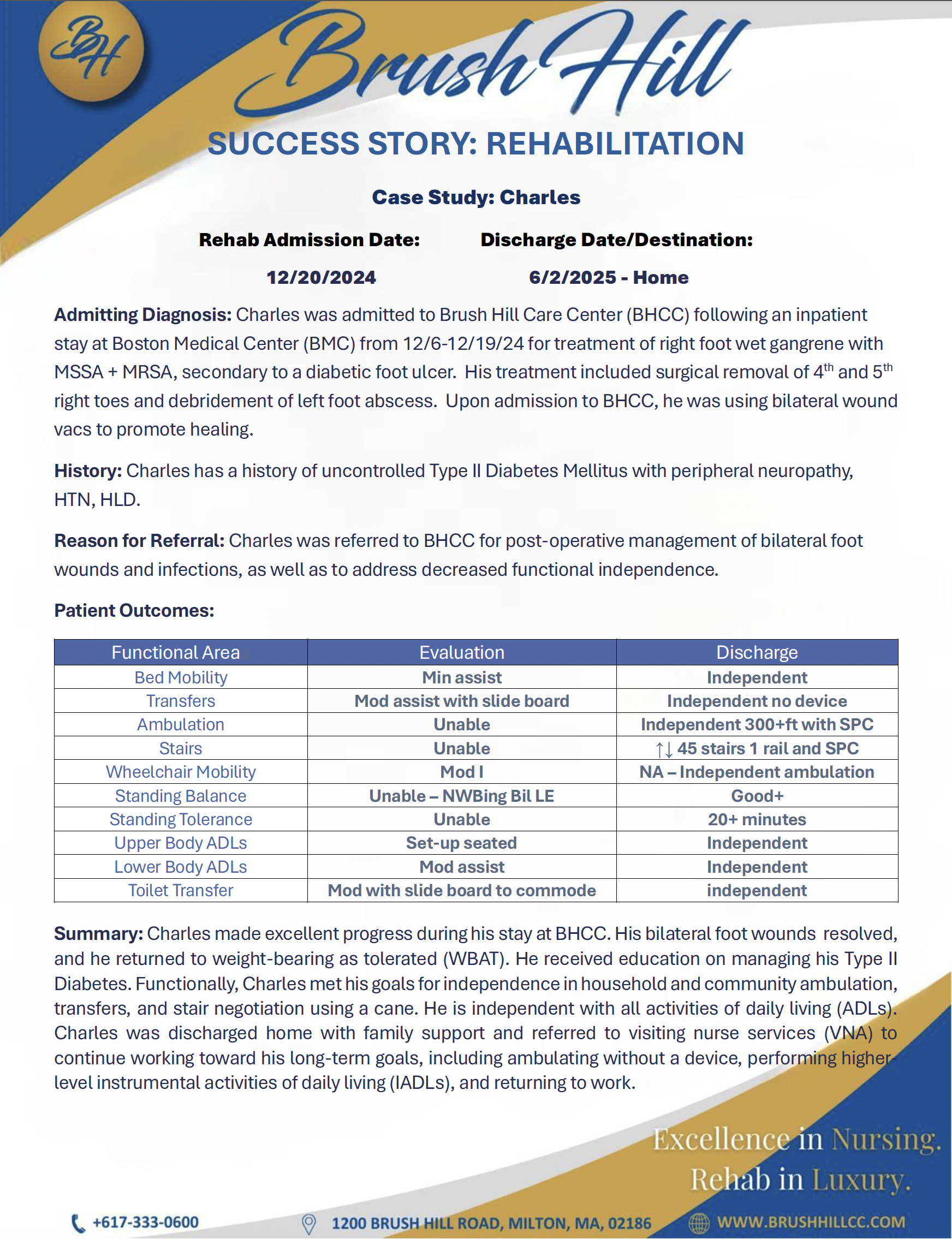
Charles’s Success Story:
Success Story
A real return to daily life
Rehab success is not only about improving clinical measures—it’s about restoring independence, confidence, and quality of life. For our guest, that meant returning to daily routines, reconnecting with family, and resuming favorite activities. For others—whether younger adults recovering from traumatic injuries or older adults regaining independence after surgery—the same combination of skilled therapy, nursing care, and coordinated planning makes recovery possible.
Rehabilitation in a skilled nursing setting offers a structured path from illness or injury back to everyday life. With an individualized plan, a dedicated care team, and family involvement, people of all ages can make meaningful progress toward their goals. At Brush Hill Care Center, our focus is on helping each person take those steps forward—one measurable victory at a time.