
When a hospitalized loved one is discharged in the Greater Boston area, hospital case managers often use terms like "rehab," "skilled nursing," or "sub-acute care" interchangeably. For families navigating Boston’s medical ecosystem—such as transitions from Mass General Brigham, Beth Israel Deaconess, or Boston Medical Center—understanding the distinction between Short-Term Post-Acute Rehabilitation and Long-Term Skilled Nursing is critical.
While both types of care often take place in the same physical facility (commonly referred to as a Skilled Nursing Facility or SNF), their clinical goals, insurance coverage rules, and expected outcomes differ entirely. Brush Hill Care Center offers short-term rehabilitation and skilled nursing care in Milton, MA.
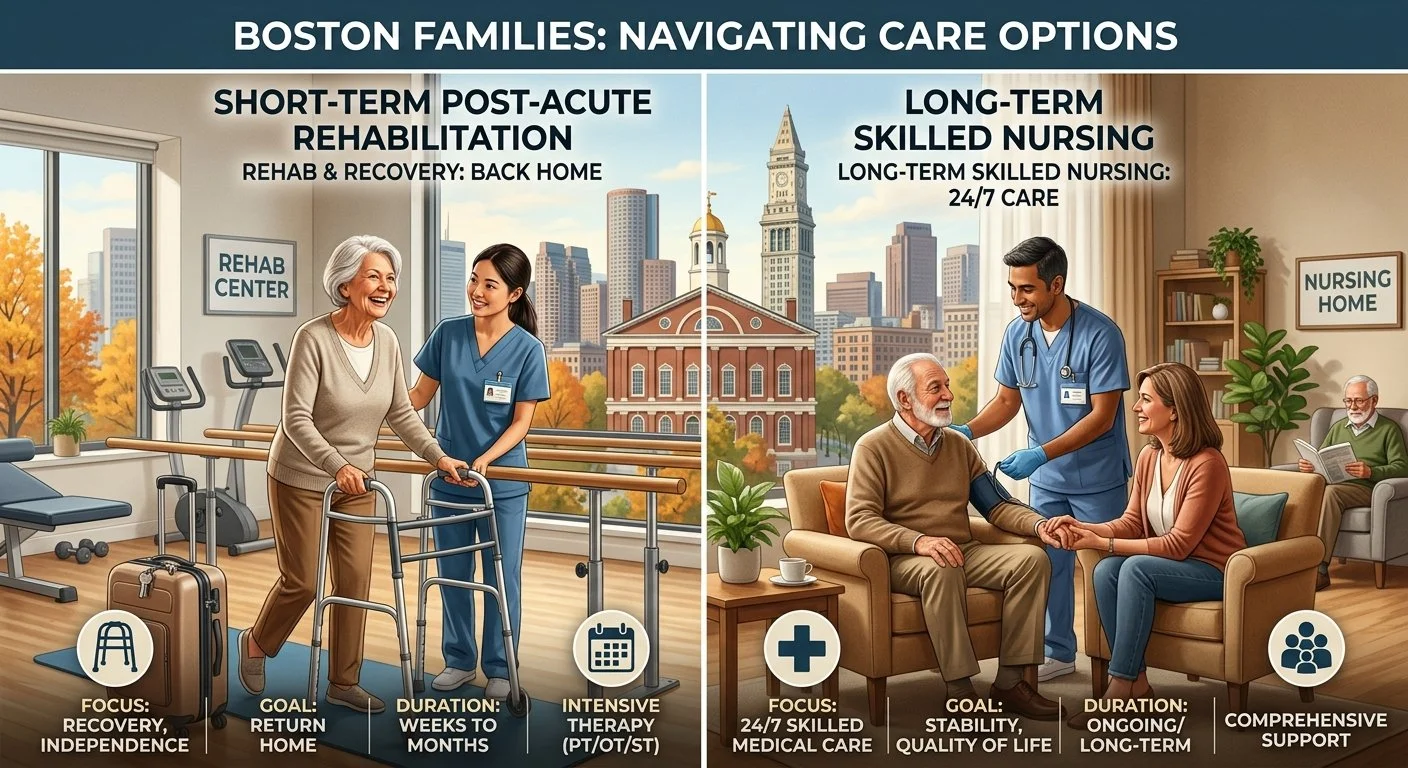
Short-Term Post-Acute Rehabilitation vs. Long-Term Skilled Nursing.
1. Defining the Core Differences
The main differences come down to intent, timeline, and therapy intensity.
Short-Term Post-Acute Rehabilitation: A time-limited, goal-driven program designed for individuals recovering from an acute medical event, surgery, or major injury (e.g., hip replacements, strokes, cardiac events, or severe deconditioning). The explicit objective is functional recovery so the patient can safely return home or to a lower level of care.
Long-Term Skilled Nursing: Continuous, 24/7 medical oversight and custodial support for individuals with chronic, progressive, or unstable conditions who can no longer live safely on their own. The focus here is clinical stabilization, risk management (such as fall prevention and skin integrity), and maintenance of life quality rather than discharge home.
2. Quick Comparison Guide for Boston Care Planners
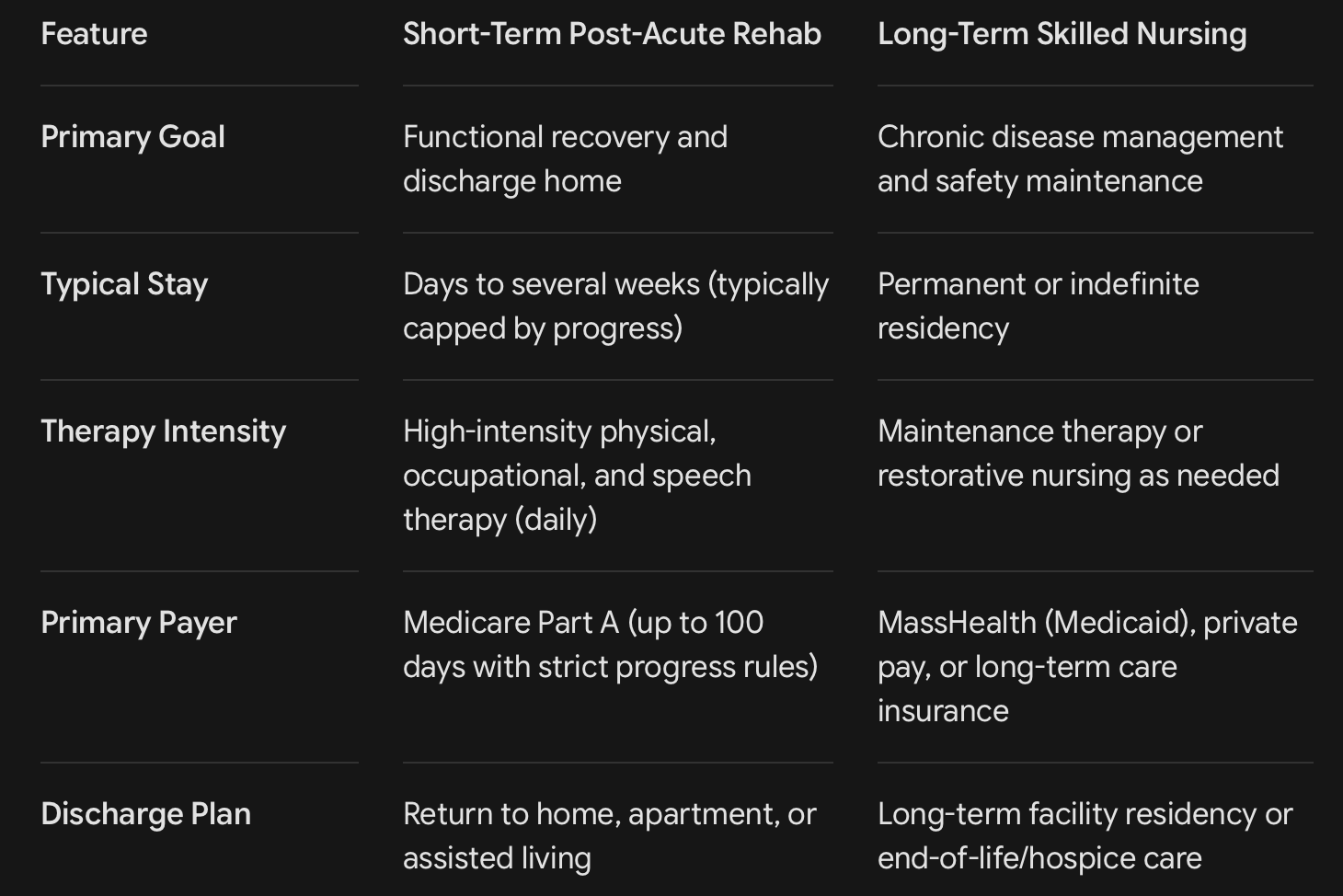
Short-Term Post-Acute Rehabilitation vs. Long-Term Skilled Nursing Summary Table
3. How Insurance and Medicare Pay for Each Track
Navigating payment options in Massachusetts can drastically alter a family’s financial exposure depending on which track a patient falls into.
Medicare Part A coverage: Medicare Part A may cover up to 100 days of eligible skilled nursing facility care per benefit period when its coverage requirements are met. Coverage depends on the need for skilled care and other eligibility criteria, not simply on continued improvement. Skilled nursing or therapy may also be covered to maintain a condition or prevent or slow decline. Confirm hospital-stay requirements, costs and plan rules with Medicare or your health plan. See Medicare’s skilled nursing facility coverage guidance and CMS guidance on skilled maintenance care.
Long-term care funding: Medicare generally does not cover long-term custodial care. Families should discuss private payment, long-term care insurance and possible MassHealth eligibility with the discharge team and the relevant program. Eligibility depends on the person’s circumstances.
4. Key Questions Boston Families Should Ask During Discharge
When evaluating a facility in Suffolk County or surrounding Greater Boston suburbs, families should clarify the care path immediately with the discharge coordinator:
Is the patient admitted under a Medicare rehab benefit with a clear, active target for returning home, or are we evaluating for long-term placement?
What is the frequency and duration of daily physical and occupational therapy being offered at this specific facility?
What happens if therapy goals plateau before the patient is safe to live alone? How does the facility handle the transition from short-term rehab to long-term care applications?
Tip: Compare the care you need with each facility’s available services. Review inspection, staffing and quality information, and ask the facility how it plans care for both short stays and ongoing support.
Are you currently planning a hospital discharge in the Boston area, and trying to determine if your loved one qualifies for short-term rehab or long-term placement?
Contact Us Now to see how BHCC Nursing & Rehab Can Help You Today!